

Pharmaceuticals are one of the most vital industries keeping the world running. Whether you are involved in the industry or not, the quality control and reliability of top drug companies affect everyone at some point.
It also affects the companies. Life science industries heavily rely on consumers' trust and familiarity, which are built over time. For pharmaceutical organizations, trust is built on continuous quality products that produce consistent results with minimal risks, innovation that saves lives, and making patients' health a priority.
However, trust has been dwindling in recent years, as has the pharmaceutical industry's reputation. Companies now need to put forward their best intentions and work to rebuild their rapport more than ever, which means working heavily on quality improvement and focusing on research and development. The good news is that several companies have started implementing changes. Currently, the market is seeing some dramatic medical tech and advancements in medical product availability.
In today’s article, we are going to explore which companies are leading the industry in terms of revenue, trust, brand integrity, and reputation. Then, we’ll analyze which companies rank in the top 10 across all categories.
Let's dive in!
How we picked the top 10 drug companies by revenue
Below are the top 10 pharma companies by revenue as of March 2026. Revenue reflects the total annual income generated from product sales and operations and is a key measure of a company’s size, market reach, and business performance.
Ranking in the top 10 by revenue indicates that these companies lead the industry in total sales, underscoring their global footprint, diversified portfolios, and sustained demand for their products.
1. CVS Health, ≈$394 billion
CVS Health is a leading integrated healthcare company operating retail pharmacies, pharmacy benefit management (Caremark), and health insurance (Aetna). In 2026, CVS continues to refine its strategy under new leadership, focusing on stronger profitability, expanding its healthcare benefits footprint, and investing in digital health and AI-powered platforms to unify care delivery. It also manages thousands of retail pharmacy locations with embedded primary care clinics and is navigating evolving regulatory and pricing pressures in the U.S. healthcare system.
2. Johnson and Johnson, ≈$92 billion
Johnson and Johnson remains one of the largest diversified healthcare companies globally, with major businesses in pharmaceuticals, medical devices, and consumer health. Its innovative drug portfolio spans immunology, oncology, and cardiovascular therapies, supported by a strong balance sheet and diversified revenues that provide resilience even amid industry headwinds.
3. Sinopharm, ≈$80 billion
Sinopharm Group is China’s largest state-owned pharmaceutical and healthcare services company, spanning drug R&D, manufacturing, wholesale distribution, and retail pharmacy networks. It plays a central role in China’s pharmaceutical supply chain and hospital logistics, with strategic importance in both domestic drug distribution and healthcare delivery systems.
4. Roche, ≈$80 billion
Roche is a Swiss multinational known for its strong oncology franchise and industry-leading diagnostics business. Its model blends innovative drug development with diagnostic tools that enhance disease detection and treatment selection, giving it a diversified revenue base and defensive characteristics in volatile markets.
5. Merck & Co., ≈$80 billion
Merck is a major U.S. pharmaceutical company with a broad portfolio including oncology, vaccines, immunotherapy, and other specialty therapies. In 2026, it is reorganizing its operations into oncology and non-oncology units to address the impending 2028 patent expiration of its cancer blockbuster Keytruda, while expanding its pipeline with acquisitions and late-stage clinical programs.
6. Pfizer, ≈$62 billion
Pfizer remains a global pharmaceutical and biotech leader with key products spanning vaccines, oncology, obesity therapies, and internal medicine. It continues to invest in next-generation therapies and leverages a broad commercial infrastructure while navigating competitive pressures and evolving market dynamics.
7. AbbVie, ≈$59 billion
AbbVie’s growth in 2026 is driven by strong performance in immunology and oncology segments, expanding through strategic partnerships and pipeline investments. It continues to diversify beyond legacy products by focusing on innovative therapies and long-term R&D commitments.
8. Eli Lilly, ≈$59 billion
Eli Lilly is among the world’s largest pharmaceutical companies, propelled by blockbuster metabolic and diabetes drugs and a rapidly expanding pipeline. Its strong commercial execution and continued investment in innovation have pushed it into the top tier of global pharma market valuations.
9. AstraZeneca, ≈$58 billion
AstraZeneca is a global biopharmaceutical company with diversified strengths in oncology, cardiovascular/metabolic/renal (CVRM), respiratory, and rare diseases. It is expanding its R&D footprint and shaping its strategy around advanced therapies and data-driven drug development, including recent AI technology integrations for clinical research.
10. Novartis, ≈$56 billion
Novartis is a Swiss pharma leader focused on innovative medicines across oncology, immunology, and targeted therapies. It has prioritized high-growth segments following the simplification of its portfolio and sustained strategic deals to bolster its pipeline and manufacturing capabilities globally.
How we picked the top 10 drug companies by reputation and trust
The best companies aren’t always the ones that dominate the shelves. In fact, some of the most exceptional companies operate quietly behind the scenes, largely unnoticed by the general public. Some companies with the best qualities and reputations act as suppliers for the preparation of medicines, and some prepare drugs for rare diseases. However, many of the top drug companies are also the ones you expect on the middle shelves of any pharmacy. Hence, choosing the top 10 is a bit tricky.
Nevertheless, several surveys worldwide have been conducted on the top pharmaceutical companies, and we used official data from Caliber. They surveyed thirteen countries and more than thirty thousand people to assess how the pharmaceutical companies were doing in their minds and which were at the top.
How the survey was done:
To keep things fair, the survey only took opinions from people who responded 4 or above on a 1-7 scale in familiarity with the company and its products. Among the companies, only eight scored 15% or higher (the standard) in the familiarity score.
The survey collects scores on how people feel about the company's authenticity and brand integrity, whether they trust and like the brand, its leadership, innovation, relevance, etc. These qualities were chosen deliberately. Based on these, it's possible to understand the people's perspective of a brand and recognize the true leaders in the field.
The TL Score
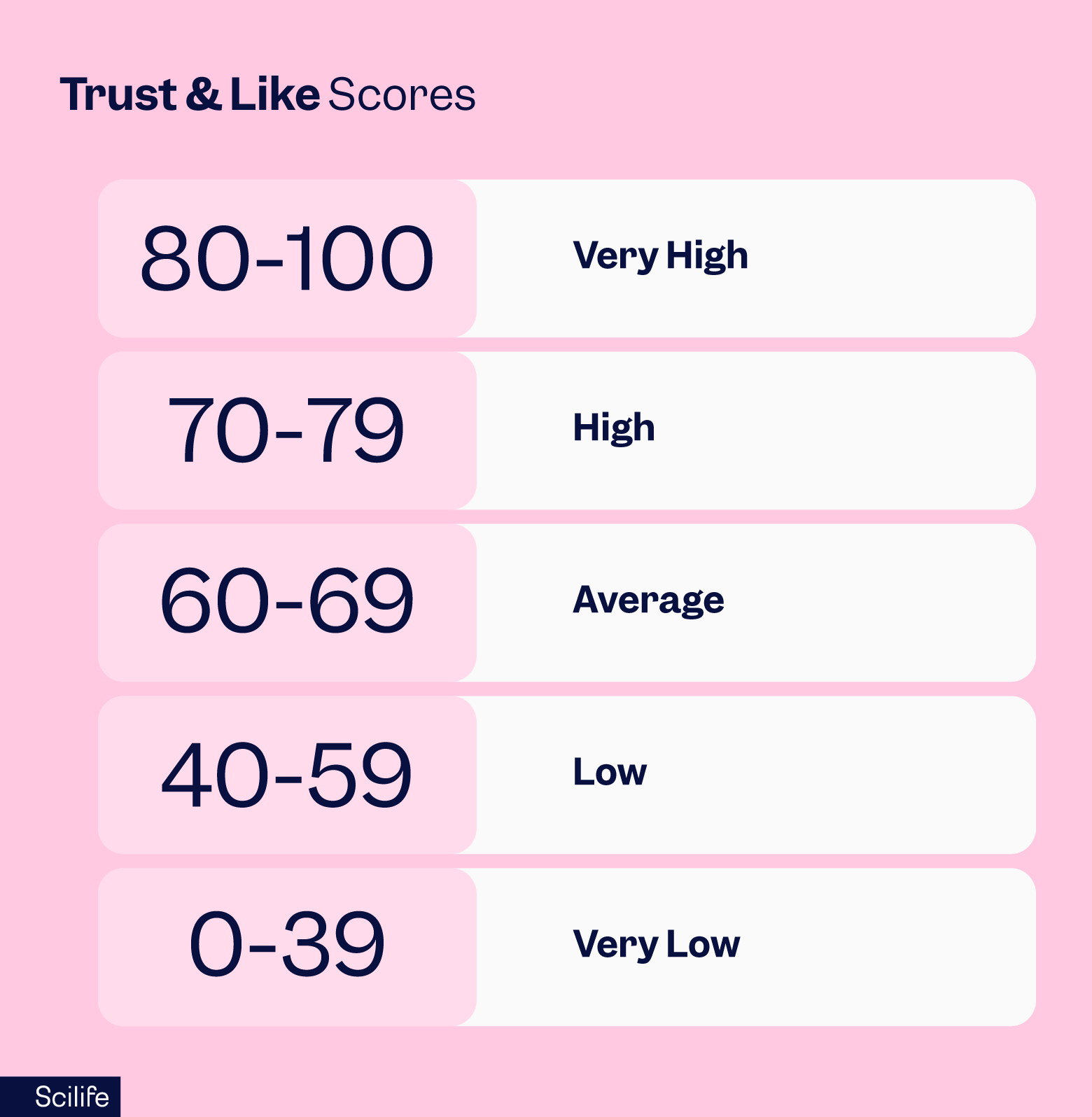
One of the major concerns currently facing the pharmaceutical industry is its general perceived image. Big Pharma is fighting to keep its credibility. Hence, one of the major indices of the survey is the trust and like score.
One can tell a lot from whether a brand’s customers trust and like it. According to Caliber, trust and like directly affect how stakeholders behave as well. It’s a measure of the brand's reputation.
The top 10 drug companies in 2024 by reputation and trust
Choosing the top 10 drug companies is not simple. It’s not just about choosing the company with the highest sales. Although that doesn't matter, the focus should be on companies that are the true leaders of the industry. Companies that have the most innovative drugs, companies that have earned the trust of their customers, and companies that make a change are the ones to look out for.
We chose the top pharmaceutical companies based on the official data from an in-depth survey report from Caliber. These companies are chosen based on their trust and like score.
However, to truly ensure the top companies were selected, companies with a market capitalization of over 25 billion were considered.
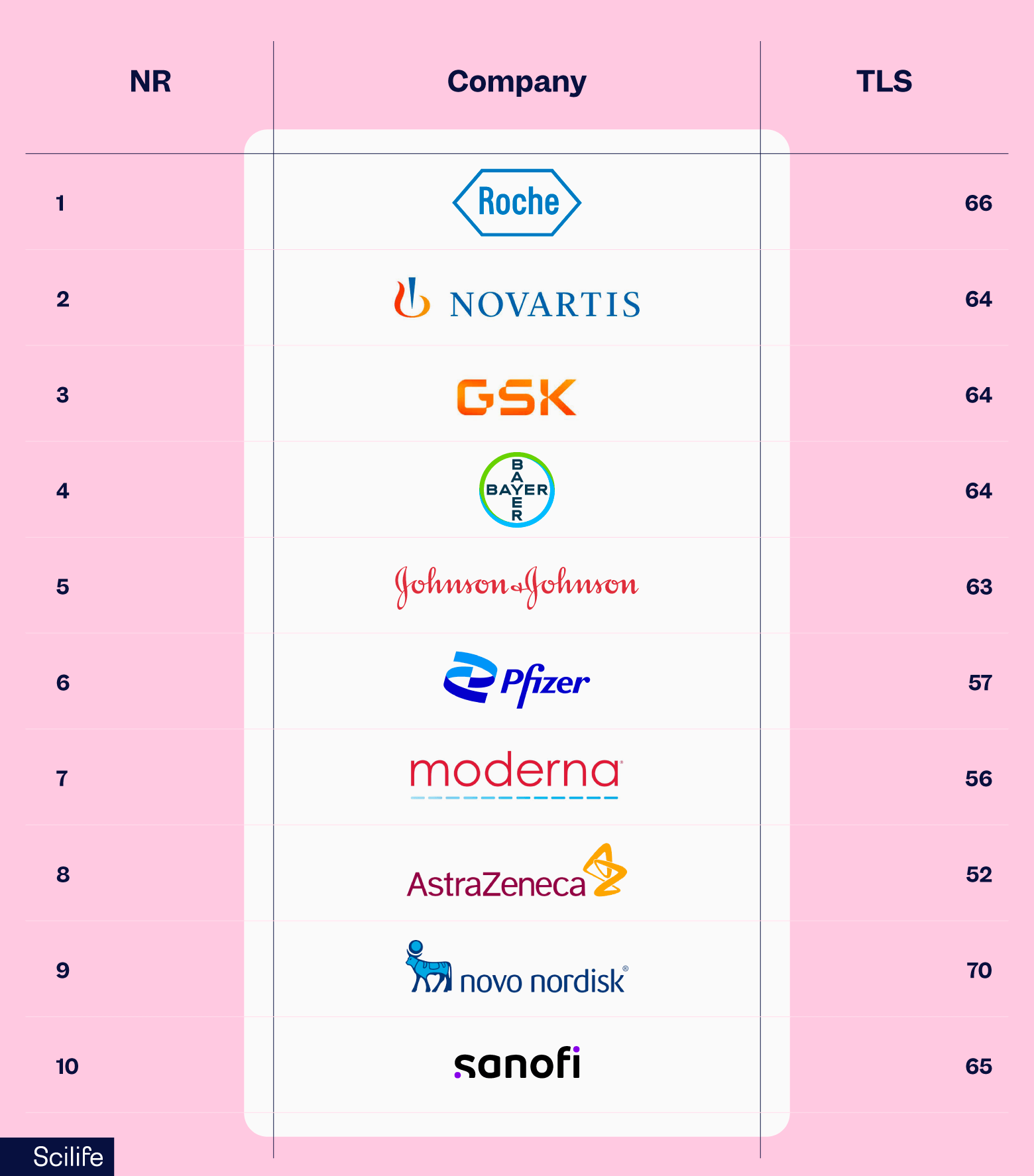
1. Roche
Roche is a Swiss healthcare company that focuses on pharmaceuticals and diagnostics. Their work has made them a global leader in cancer treatments. They provide many cancer treatments worldwide and also focus on immunology, infectious diseases, ophthalmology, etc. They are notably the world's highest spender in pharmaceutical research and development. This is the top pharmaceutical company in Belgium and France.
2. Novartis
Novartis, one of the largest pharmaceutical companies in the world, has the highest trust and like score among the most familiar pharmaceutical companies. They are also a Swiss pharmaceutical company with two major branches in pharmaceuticals and generics. Novartis is known for its cutting-edge medical innovation in all branches of medicine and its research institutes. They are also a producer of vaccines for preventable tropical diseases.
3. GSK
GSK is a British multinational pharmaceutical company that manufactures medicines and vaccines. It is well-reputed for its quality products for asthma, infectious diseases, cancer, diabetes, etc. It is the top pharmaceutical company in Sweden and the Netherlands.
4. Bayer
Bayer is considered the top pharmaceutical company in China, the USA, and the UK. This company works in all sectors of life sciences, including pharmaceuticals, chemicals, healthcare, and more. It is known for its medicines, agricultural products, and over-the-counter health products.
5. Johnson and Johnson
Johnson and Johnson is a well-known American company with pharmaceutical products, medical devices, and health products. They have a high familiarity score and a loyal customer base.
6. Pfizer
Known for its vaccines, Pfizer also works with pharmaceutical products. They are one of the major manufacturers of COVID-19 vaccines used worldwide. Apart from COVID-19, Pfizer is well known for its other vaccines, including the pneumococcal vaccine.
7. Moderna
Also a manufacturer of the COVID-19 vaccine, Moderna is known to many. They produce mRNA vaccines and preventive medicines.
8. AstraZeneca
AstraZeneca is a manufacturer of the COVID-19 vaccine that focuses heavily on innovation. Apart from COVID-19 vaccines, they also make medicine for asthma and cancer.
9. Novo Nordisk
Novo Nordisk is the top pharmaceutical company in Denmark. It is a leader in diabetic medication and insulin production. It has impressive TL scores and a good reputation among its consumers. They have recently been made more popular by mainstream media for their new drug, Ozempic.
10. Sanofi
Sanofi is a well-known French pharmaceutical company that works with medicines and vaccines.
Having explored both rankings independently, the next step is to examine where they intersect. Which companies combine financial scale with strong stakeholder trust?
Where financial scale and reputation align
Each ranking highlights a different dimension of industry leadership. Revenue reflects a company's performance and operational scale, while trust and reputation scores reflect stakeholder perception and brand strength.
Five companies appear in both the top 10 by revenue and the top 10 by trust and reputation:
-
Roche
-
Novartis
-
Johnson & Johnson
-
Pfizer
-
AstraZeneca
Their presence in both rankings illustrates how financial strength and stakeholder confidence can reinforce one another. At the same time, differences between the lists underscore that industry leadership can be defined in multiple ways, whether through market performance, public trust, innovation, or strategic positioning.
What makes a drug company trustworthy?
Unfortunately, trust and pharmaceuticals do not go hand in hand. In the current decade, the influence of Big Pharma on healthcare, soaring costs, and some major adverse events have sown suspicions in many consumers. Negative media coverage has also played a large role in people’s wavering trust.
However, the way forward is clear. As seen in the survey, people trust companies that deliver quality. Trust is built when the company's products provide effective treatment.
Pharmaceutical companies that consistently proved to be reliable, made great products, focused on innovation, dealt with complaints swiftly and efficiently, and reached out to their consumers were given high trust and like scores. They also consistently had more sales than others.
These traits are also seen in companies that maintain efficient quality management systems.
Building trust in pharma: how a strong focus on quality makes the difference
Pharmaceuticals are a need-based industry. The equation is simple. Companies that can provide clients with what they require, such as safe medications, earn their trust.
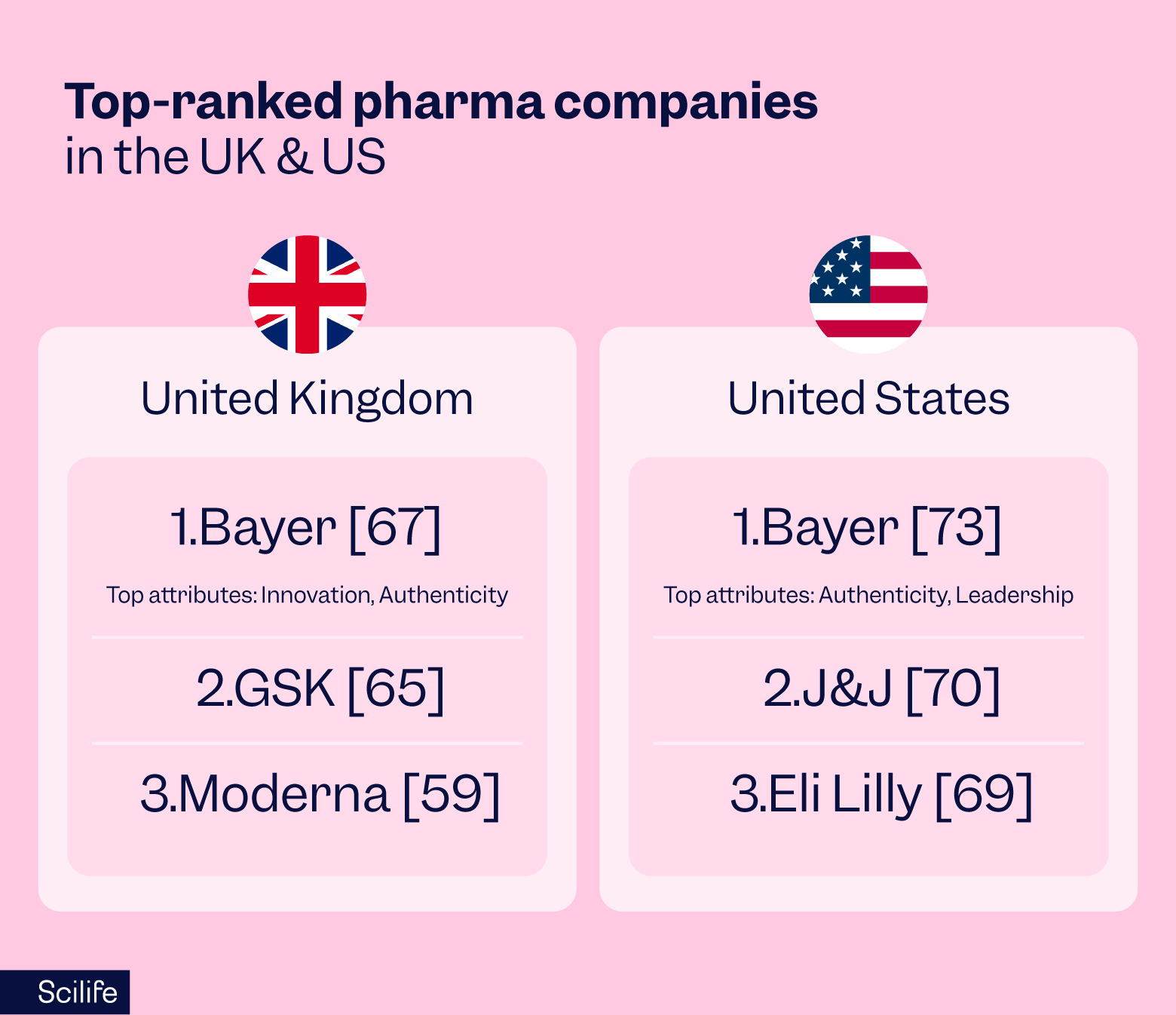
If we take a look at the top pharmaceutical companies, it’s apparent that their work focuses heavily on innovation and service.
In fact, the survey itself concludes that the three qualities of the most liked and trusted companies are “Inspiration, Offering, and Innovation.” Each of these three requires maintaining integrity, quality of operation, and proper preventive and corrective actions.
Many of these multi-billion-dollar companies cultivate a quality-first culture, where each employee and team is conscious of the quality of their work and product. It also promotes a good work ethic, empowers innovation, and encourages positive leadership. A robust quality management system also enforces accountability and solves problems at the source. These practices eventually save resources and boost production.
Not to mention, with the negative attention of pharmaceuticals, most companies cannot risk failing in quality maintenance. Any report on unmanaged adverse events is enough to cause serious damage to a company.
A thorough QMS also ensures all documents are filled, saved, and updated on time. This step alone keeps your teams ahead in the regulation submission.
Scilife tips: How an eQMS can help you ensure patient safety and build trust
Establishing a foolproof quality management system is easier said than done. Even for midsize companies, it can be a daunting task. Since quality management is involved in every stage of manufacturing, from checking supplier qualification to ensuring packaging and post-market surveillance, it is a vast operation.
A simple solution to this problem is to implement an eQMS like Scilife. With an eQMS, you can track, monitor, and ensure the quality of all operations in real time. It eliminates delays from waiting for updates or tracking products, and saves all data, making it easier to identify and resolve issues. This also saves regulatory teams time and resources. In short, if you want to stay ahead, an eQMS is an essential tool for your company.